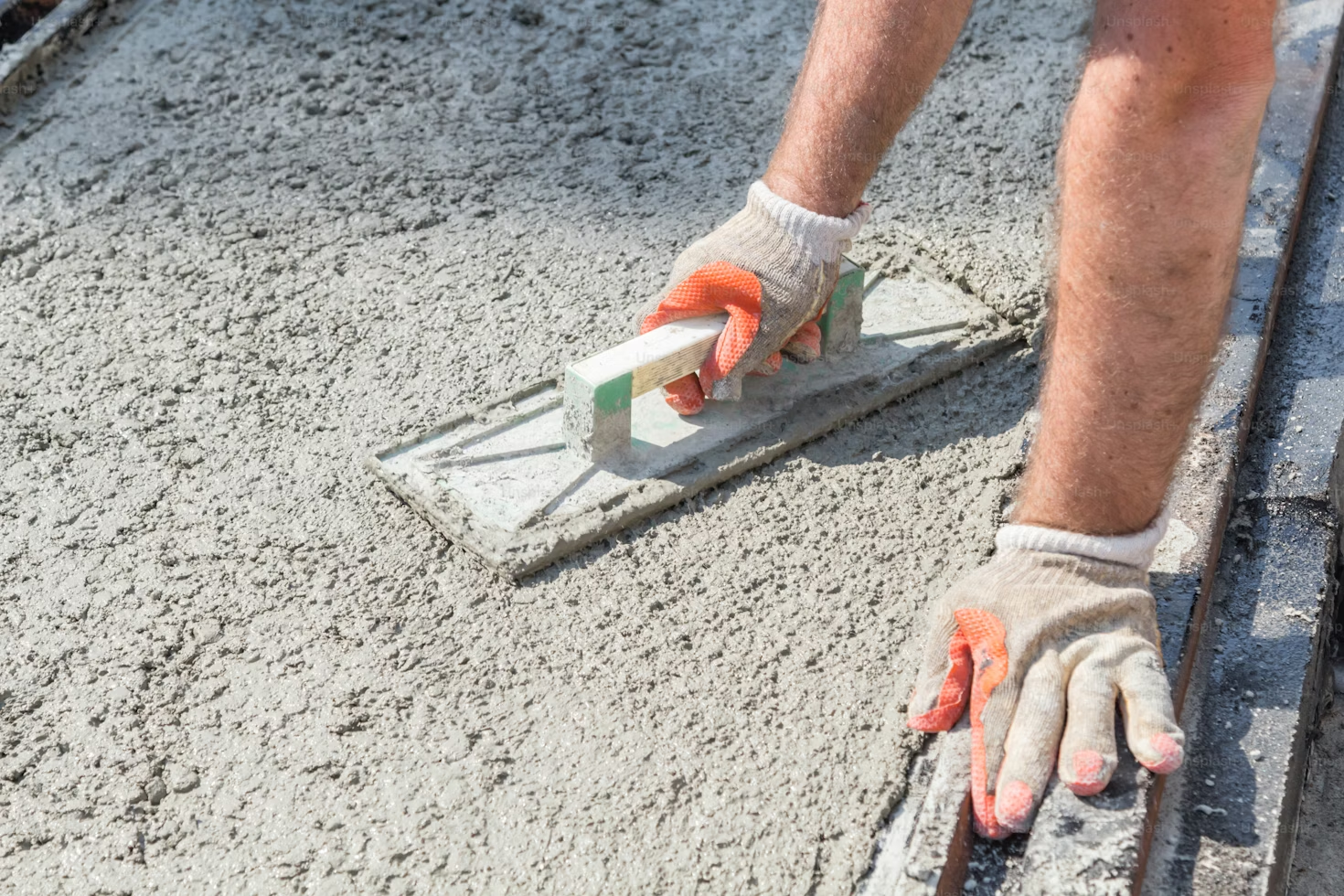
Concrete estimating forms the foundation of construction cost estimation for virtually all building projects. From residential foundations to massive commercial structures, concrete work represents significant portions of construction budgets requiring accurate analysis and careful planning. This comprehensive guide covers every aspect of concrete estimating including materials, labor, equipment, and project-specific considerations.
Understanding Concrete Systems in Construction
Concrete serves as the primary structural material for foundations, floors, walls, and structural elements in most construction projects. Understanding the various concrete applications and systems is essential for accurate estimating.
Foundation Systems
Foundation systems transfer building loads to underlying soil or bedrock while providing stable, level bases for construction. Foundation types include full basements, crawl spaces, slab-on-grade, pier and beam, and mat foundations depending on soil conditions, climate, and building requirements.
Basement foundations provide additional living or storage space but require excavation, waterproofing, and drainage systems. Slab-on-grade foundations offer cost savings for warmer climates where frost protection is less critical.
Structural Concrete Elements
Structural concrete includes columns, beams, floors, and walls that support building loads. Cast-in-place concrete provides monolithic structures with excellent strength and durability. Precast concrete offers quality control and schedule advantages for repetitive elements.
Post-tensioned concrete uses high-strength steel cables tensioned after concrete curing to provide enhanced strength and reduced cracking. This technique allows longer spans and thinner slabs compared to conventionally reinforced concrete.
Flatwork and Site Concrete
Site concrete includes sidewalks, driveways, patios, parking lots, and paved areas surrounding buildings. While less structurally critical than foundation and structural concrete, flatwork requires careful attention to drainage, durability, and aesthetics.
Decorative concrete options including stamped patterns, colored concrete, and exposed aggregate provide aesthetic enhancements at additional cost. These finishes require specialized techniques and materials affecting project pricing.
Concrete Material Estimating
Accurate concrete estimating begins with understanding material requirements including concrete mixes, reinforcement, and accessory materials.
Concrete Mix Design and Costs
Concrete pricing varies by strength, mix design, and regional market conditions. Standard residential concrete with 3,000 PSI strength costs $120 to $150 per cubic yard in most markets. High-strength concrete exceeding 5,000 PSI for structural applications costs $150 to $200 per cubic yard.
Specialty concrete including fiber-reinforced, lightweight, or high-early-strength mixes command premium pricing due to additives and specialized materials. These products may cost 25-50% more than standard concrete.
Concrete delivery requires minimum load charges and short-load fees for small quantities. Ordering concrete efficiently to minimize delivery charges improves project economics.
Reinforcement Materials
Steel reinforcement provides tensile strength to concrete structures. Rebar costs $0.80 to $1.20 per pound depending on grade and bar size. Standard residential foundations might require $2,000 to $5,000 in rebar materials.
Wire mesh provides reinforcement for slabs and flatwork at lower cost than rebar. Mesh costs $0.50 to $0.80 per square foot installed, representing significant savings for appropriate applications.
Fiber reinforcement added to concrete mixes at the plant costs $8 to $15 per cubic yard. This option provides crack control without separate reinforcement placement, reducing labor costs.
Formwork Materials
Formwork represents a major cost in concrete construction, particularly for vertical elements like walls and columns. Wood forms built on-site cost $3 to $6 per square foot of contact area depending on complexity and reuse potential.
Engineered form systems including aluminum, steel, or plastic forms offer improved productivity for repetitive elements. These systems require capital investment but reduce labor costs and improve concrete finish quality.
Rental form systems provide alternatives for contractors without extensive form inventories. Monthly rental costs range from $0.50 to $2.00 per square foot depending on form type and duration.
Foundation Estimating
Foundation estimating requires analysis of excavation, concrete, reinforcement, and finishing requirements for various foundation types.
Basement Foundation Costs
Full basement foundations for typical residential construction cost $15 to $25 per square foot of basement area. A 1,500 square foot basement foundation costs $22,500 to $37,500 including excavation, concrete, reinforcement, waterproofing, and drainage.
Deep basements exceeding standard 8-foot heights or including walk-out portions require additional excavation and concrete. Complex foundations with stepped elevations or irregular shapes cost more than simple rectangular designs.
Slab-on-Grade Foundations
Slab-on-grade foundations provide economical support for buildings in warmer climates without frost concerns. Standard residential slabs cost $5 to $10 per square foot including preparation, concrete, reinforcement, and finishing.
Post-tensioned slabs for commercial or residential applications on expansive soils cost $8 to $15 per square foot. Post-tensioning cables and specialized installation add costs but provide superior performance on problematic soils.
Crawl Space Foundations
Crawl space foundations combine perimeter walls with interior pier supports, providing access to utilities while reducing excavation costs. These foundations cost $8 to $15 per square foot of building footprint.
Pier and beam foundations elevate structures on concrete piers with wooden or steel beams spanning between supports. This traditional foundation type costs $6,000 to $15,000 for typical homes depending on pier count and beam requirements.
Structural Concrete Estimating
Structural concrete for buildings requires detailed analysis of columns, beams, floors, and walls with complex forming and reinforcement requirements.
Column and Beam Costs
Concrete columns cost $400 to $800 per cubic yard installed including forming, concrete, reinforcement, and finishing. A typical 12-inch by 12-inch column 10 feet tall represents approximately 0.37 cubic yards costing $150 to $300.
Concrete beams and girders supporting floor systems cost $500 to $1,000 per cubic yard due to complex forming requirements. These elements often require architectural finishes increasing costs beyond standard concrete.
Floor Slab Systems
Concrete floor slabs on metal deck for commercial buildings cost $12 to $20 per square foot including concrete, reinforcement, and finishing. Elevated slabs require pump placement and finishing access increasing costs over ground-supported slabs.
Post-tensioned floor systems cost $15 to $25 per square foot including tendon installation and stressing operations. These systems provide longer spans and reduced slab thickness compared to conventionally reinforced floors.
Concrete Wall Systems
Cast-in-place concrete walls cost $25 to $45 per square foot of wall area including forming, concrete, and finishing. Complex walls with architectural finishes, integral color, or special textures cost $40 to $80 per square foot.
Tilt-up concrete walls constructed on-site and raised into position provide efficient construction for commercial buildings. Tilt-up costs $18 to $30 per square foot of wall area for standard panels.
Site Concrete and Flatwork
Site concrete estimating addresses sidewalks, driveways, patios, parking lots, and paved surfaces surrounding buildings.
Residential Concrete Flatwork
Residential sidewalks, driveways, and patios cost $6 to $12 per square foot depending on thickness, reinforcement, and finish type. Standard 4-inch unreinforced driveways represent the lower end while 6-inch reinforced slabs with decorative finishes cost more.
Stamped concrete providing decorative stone or brick patterns costs $12 to $20 per square foot. The stamping process requires specialized tools, release agents, and coloring systems adding labor and material costs.
Exposed aggregate finishes created by washing away surface mortar reveal decorative stone beneath. This attractive finish costs $8 to $15 per square foot depending on aggregate type and project size.
Commercial Site Concrete
Commercial parking lots and paved areas require thicker sections, heavier reinforcement, and more durable finishes than residential work. Standard parking lot concrete costs $8 to $15 per square foot installed.
Loading docks, dumpster pads, and heavy traffic areas require 6-inch to 8-inch thickness with heavy reinforcement. These applications cost $12 to $25 per square foot due to increased material requirements.
Concrete curbs, gutters, and sidewalks in commercial developments require specialized equipment and finishing. Curb and gutter costs $15 to $30 per linear foot depending on size and reinforcement.
Labor and Productivity Considerations
Labor represents 40-60% of concrete project costs, making productivity analysis essential for accurate estimating.
Concrete Placement Productivity
Concrete placement rates vary significantly based on access, equipment availability, and project complexity. Standard foundations with good access allow placement rates of 10-20 cubic yards per crew hour.
High-rise or remote placements requiring concrete pumps achieve lower productivity due to pump setup, line management, and vertical pumping challenges. These applications may achieve only 5-10 cubic yards per crew hour.
Formwork Labor
Formwork construction represents the most labor-intensive aspect of concrete work. Simple foundation forms yield 8-15 square feet of contact area per carpenter hour. Complex architectural forms achieve only 3-8 square feet per hour.
Form reuse dramatically impacts labor costs for repetitive elements. High-rise construction using climbing form systems achieves excellent productivity through form reuse and system efficiency.
Reinforcement Placement
Rebar placement productivity depends on bar size, spacing, and project complexity. Standard foundations achieve 500-800 pounds of rebar per crew hour. Complex columns and beams with dense reinforcement achieve only 200-400 pounds per hour.
Prefabricated rebar cages for columns and beams fabricated off-site reduce field labor while improving quality. These assemblies require coordination and crane access but significantly improve productivity.
Equipment and Production Costs
Concrete construction requires specialized equipment affecting project costs through rental, operation, and mobilization expenses.
Concrete Pumps and Placement
Concrete pumps enable placement in locations inaccessible to ready-mix trucks. Pump rental costs $800 to $1,500 per day plus setup charges depending on pump size and boom length. Line pumps for smaller applications cost $500 to $800 per day.
Pump placement adds $40 to $80 per cubic yard to concrete costs but enables work otherwise impossible or labor-intensive. High-rise projects may require pumps for all concrete placement.
Cranes and Lifting Equipment
Concrete construction often requires cranes for formwork, reinforcement, and concrete bucket placement. Tower cranes on high-rise projects cost $15,000 to $30,000 per month including erection and operation.
Mobile cranes for smaller projects cost $1,000 to $3,000 per day depending on capacity and reach. These costs must be allocated across all trades utilizing the crane.
Finishing and Curing Equipment
Concrete finishing requires power trowels, screeds, and hand tools for quality surfaces. Equipment rental costs are modest compared to labor but necessary for professional results.
Curing compounds, blankets, or misting systems protect concrete during initial curing. These materials cost $0.50 to $2.00 per square foot but ensure proper strength development and surface quality.
Specialty Concrete Applications
Specialty concrete applications require unique materials, techniques, and expertise affecting project costs.
Decorative and Architectural Concrete
Architectural concrete with special finishes, colors, or textures commands premium pricing. Exposed aggregate, sandblast finishes, or acid staining add $5 to $15 per square foot to standard concrete costs.
Integral color added to concrete mixes provides uniform coloring throughout the material. Color admixtures add $40 to $80 per cubic yard depending on color intensity and product quality.
High-Performance Concrete
High-performance concrete with enhanced strength, durability, or chemical resistance serves demanding applications. These specialized mixes cost 50-100% more than standard concrete but provide superior long-term performance.
Self-consolidating concrete flows into complex forms without vibration, improving quality and reducing labor. This advanced material costs $150 to $250 per cubic yard but provides significant value for complex architectural elements.
Lightweight Concrete
Lightweight concrete using expanded shale or clay aggregate reduces structural loads while providing fire resistance. These mixes cost $150 to $200 per cubic yard compared to $120 to $150 for normal weight concrete.
Roofing and structural deck applications frequently utilize lightweight concrete to minimize dead loads. The material weight savings often justify increased material costs through structural steel savings.
Conclusion
Concrete estimating requires comprehensive knowledge of materials, labor, equipment, and construction techniques. From simple residential foundations to complex high-rise structures, accurate concrete estimating demands attention to mix designs, reinforcement, forming systems, and project conditions.
By mastering the principles outlined in this guide, concrete contractors can produce competitive bids that win profitable projects while delivering quality installations that meet structural requirements and satisfy customers. Continuous learning and adaptation to evolving technology and market conditions position estimators for success in this fundamental construction trade.