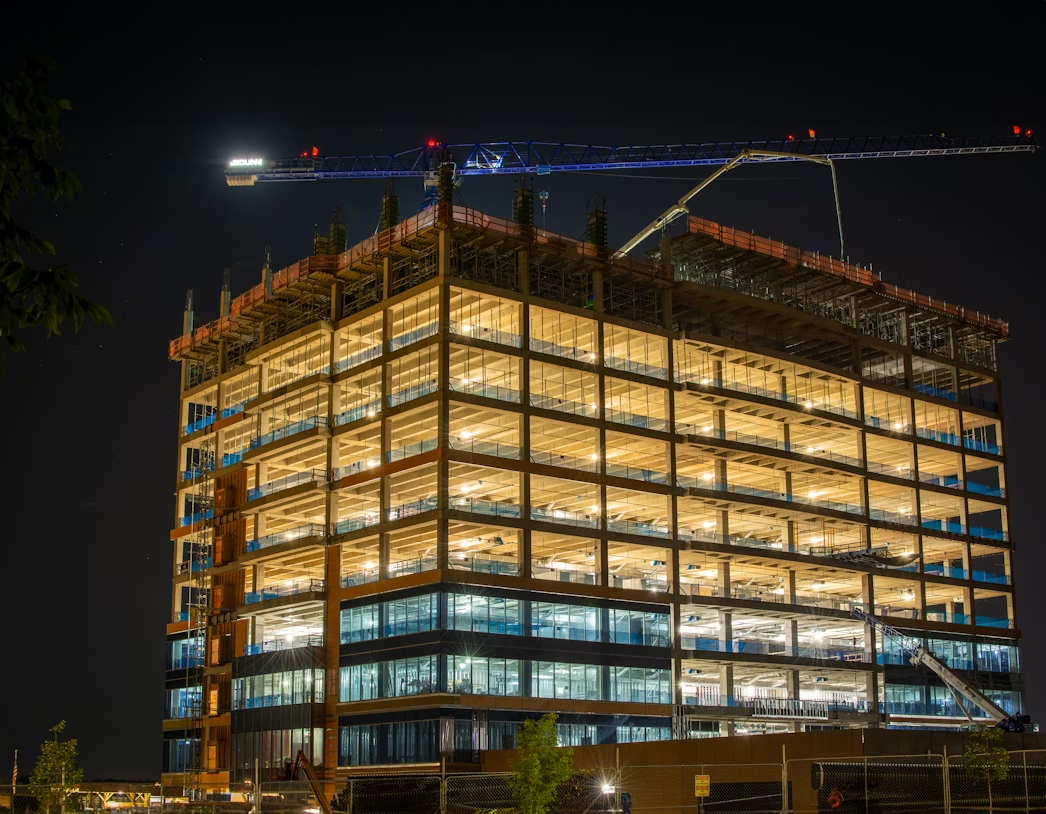
Residential and commercial estimating look similar on the surface, but the two disciplines demand different skills, data, and assumptions. Contractors who understand these differences avoid costly misses when they move between markets. This guide breaks down the seven most important differences.
1. Scope and Complexity
Residential projects are generally smaller with repeating systems and standard details. Commercial projects add complex MEP systems, fire protection, elevators, and coordination between many trades. Commercial scope documents are longer and require careful review of specifications and addenda.
2. Code and Compliance
Both markets follow local and national codes, but commercial work adds accessibility, fire, and energy requirements that change quantities. Life safety systems, emergency lighting, and sprinkler coordination must be priced line by line. See our electrical code compliance cost guide for examples.
3. Labor Productivity
Residential crews achieve higher productivity because tasks repeat and spaces are open. Commercial work in finished or occupied buildings lowers output rates. Apply different labor units for the same trade depending on the market.
4. Material Selection
Residential projects use standard, readily available materials. Commercial projects often specify engineered products, specialty finishes, and long-lead items. Ordering cycles are longer and pricing volatility affects the bid more.
5. Bid Process
Commercial bidding is formal, with strict deadlines, bid forms, alternates, and leveling of multiple subcontractor scopes. Residential bidding is often simpler and relationship driven. Learn how to prepare a competitive package in our bid proposal guide.
6. Overhead and Risk
Commercial projects carry larger risk, longer durations, and more complex insurance and bonding requirements. Builders must allocate overhead correctly and account for risk in markup. Our overhead and markup guide explains the calculation.
7. Delivery and Documentation
Commercial work relies on formal submittals, shop drawings, and closeout documentation. Residential work moves faster with fewer administrative layers. Coordinated shop drawings are a key part of commercial delivery.
Both markets are served by the estimating teams at apexaccuracyestimatinginc.com, with residential and commercial service pages covering each sector in detail.